Hario V60 Dripper Review (2026)
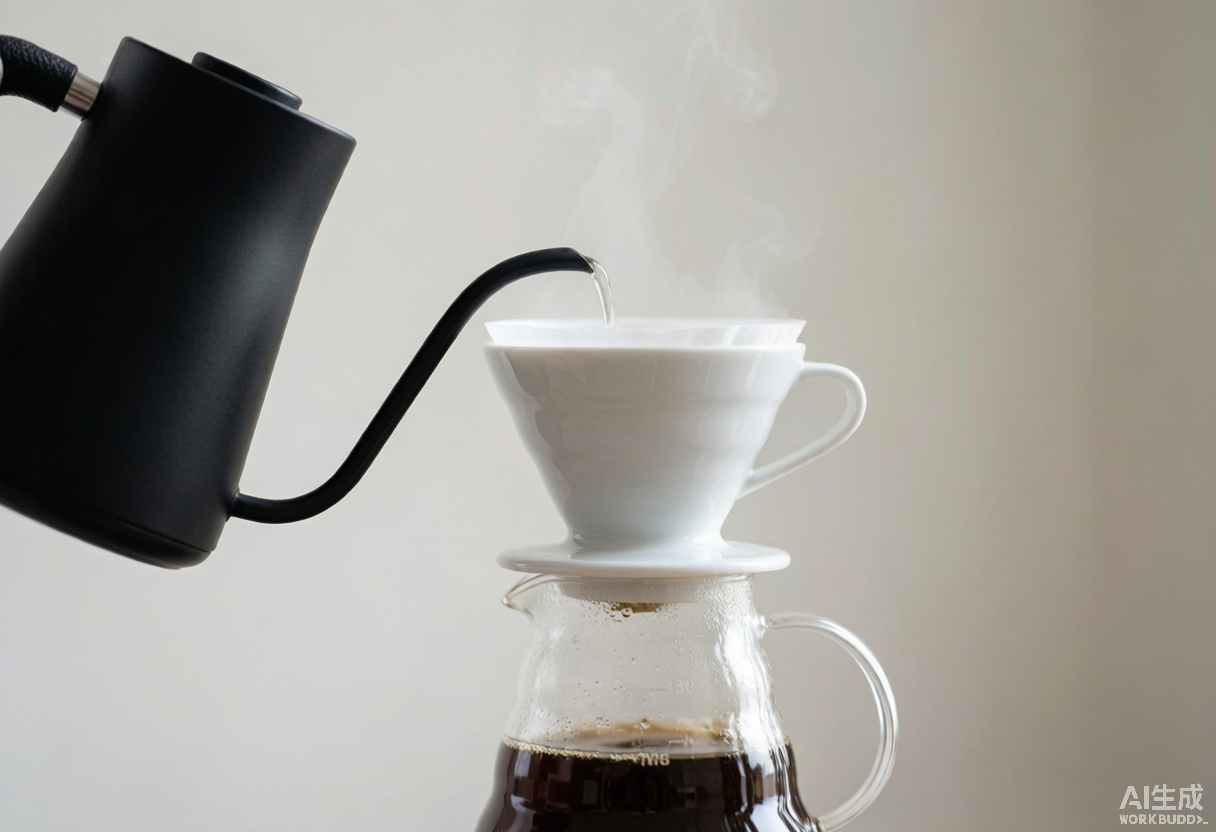
The Hario V60 is the pour-over reference point — the cone every other brewer is compared to, and the one specialty cafés actually use behind the bar. It's also the most technique-dependent brewer in coffee. Here's the honest look at why it's the standard, what it demands of you, and whether it's the right first brewer.
How we evaluate: we assess gear through published specs, aggregated owner feedback across thousands of Amazon reviews, and use-case fit — not lab testing. We only recommend products we would buy ourselves. Prices and availability change; always check the current listing.
Bottom line
Hario V60 (plastic)
The V60 is the highest-ceiling brewer per dollar in coffee: for $13 you get the same extraction physics specialty cafés use. The catch is a real technique curve — grind, temperature, pour speed all matter. Buy it if you're willing to learn (it takes about two weeks of daily brews); buy an AeroPress or French press instead if you want great coffee without the homework.
Check today’s price on Amazon →
Free shipping on eligible Amazon items · 30-day easy returns
As an Amazon Associate we earn from qualifying purchases.
At a glance
| Cone angle | 60° cone |
| Design | Spiral ribs + large single hole |
| Sizes | 01 (1-2 cups) / 02 (1-4 cups) / 03 (3-6 cups) |
| Materials | Plastic, glass, ceramic, copper variants |
| Filter | V60 paper filters required (01/02/03) |
| Price | From ~$13 (plastic) to ~$40+ (ceramic/copper) |
Pros
- + The extraction standard — the same brewer world champion baristas compete with
- + Extremely cheap entry point (plastic 02 is ~$13)
- + Light, bright, clean cup profile — the 'specialty coffee' taste
- + Simple to clean: rinse and done, no moving parts
- + Multiple materials and sizes to match any counter or budget
Cons
- − Steep technique curve — grind, temp, pour speed and timing all matter
- − Requires V60-specific paper filters (a recurring cost)
- − Needs a gooseneck kettle to unlock its potential — an extra $40-80
- − Cup quality varies wildly with skill: same beans, different brewers, different results
- − Single-serve focused — a 01 or 02 is one or two cups
Best for
Enthusiasts who enjoy the ritual and want to learn extraction — and anyone who wants the lightest, brightest cup of the common brew methods.
Deep dive
The V60's design is the physics: a 60° cone makes a deeper coffee bed, the spiral ribs create channels for even water flow, and the large single hole sets the brew speed. Those three choices produce a brew that highlights clarity and brightness — the 'pour-over taste' that drip machines can't match. It's the same setup behind the bar at specialty shops because it gives the brewer maximum control, not because it's easy.
That control is the double-edged sword. The V60 punishes inconsistency: grind too fine and it chokes and over-extracts (bitter); pour too fast and it channels (sour); water too hot and light roasts turn harsh. None of this is hard to learn — two weeks of daily brews with a fixed recipe gets you to 'good every time' — but it's a real curve. The reward is a cup you can genuinely tune: change one variable, taste the difference, and you're actually brewing, not just making coffee.
The honest prerequisites: you want a gooseneck kettle (the Cosori-class variable-temp model pairs perfectly) and decent fresh beans. Without those, the V60's ceiling is unattainable and it can produce worse coffee than a $40 drip machine. With them, it's the highest-quality-per-dollar brewer in existence. The plastic version is the smart buy — it heats and cools faster than ceramic, resists thermal shock, and costs a third as much.
Value judgment: if you like the idea of brewing as a skill and have (or will get) a gooseneck kettle, the V60 is the best $13 in coffee. If you just want a great cup with zero fuss, the AeroPress or French press is the more honest first purchase. The V60 rewards the hobbyist — which is exactly what makes it the standard.
How it compares
| vs | Why it matters |
|---|---|
| vs AeroPress | The AeroPress is forgiving and consistent; the V60 is expressive and skill-dependent. Same price class, opposite philosophies. Beginners usually enjoy the AeroPress more at first. |
| vs Kalita Wave | Kalita's flat bottom and three holes are more forgiving with a similar clean profile. The V60 has a higher ceiling; the Wave has a higher floor. For technique-averse brewers, the Wave is easier. |
| vs Chemex | The Chemex makes larger, ultra-clean batches (its thick filters strip oils). The V60 is single-serve focused with a rounder, more adjustable profile. Different volumes, similar philosophy. |
FAQ
Plastic or ceramic V60?
Plastic for beginners: cheaper, faster heat-up, unbreakable in daily use. Ceramic looks better and retains heat but needs pre-heating and costs 3x. Upgrade later if you want.
Do I need a gooseneck kettle?
Strongly recommended — the V60's even extraction depends on pour control. A regular kettle makes it frustrating; a gooseneck makes it work.
What size should I get?
01 for one cup, 02 for 1-4 cups (the common default), 03 for large batches. Get 02 unless you always brew single cups.
Can I use other filters?
No — it needs V60 paper filters in the matching size (01/02/03). Off-brand V60 filters exist and work fine at lower cost.
Ready to buy?
Our verdict on this pick — check today’s price and clip any on-page coupon on Amazon:
Hario V60 (plastic)
The V60 is the highest-ceiling brewer per dollar in coffee: for $13 you get the same extraction physics specialty cafés use. The catch is a real technique curve — grind, temperature, pour speed all matter. Buy it if you're willing to learn (it takes about two weeks of daily brews); buy an AeroPress or French press instead if you want great coffee without the homework.
As an Amazon Associate we earn from qualifying purchases.
Want exact doses? Use our free brew calculators.