Best Espresso Machine for the Office
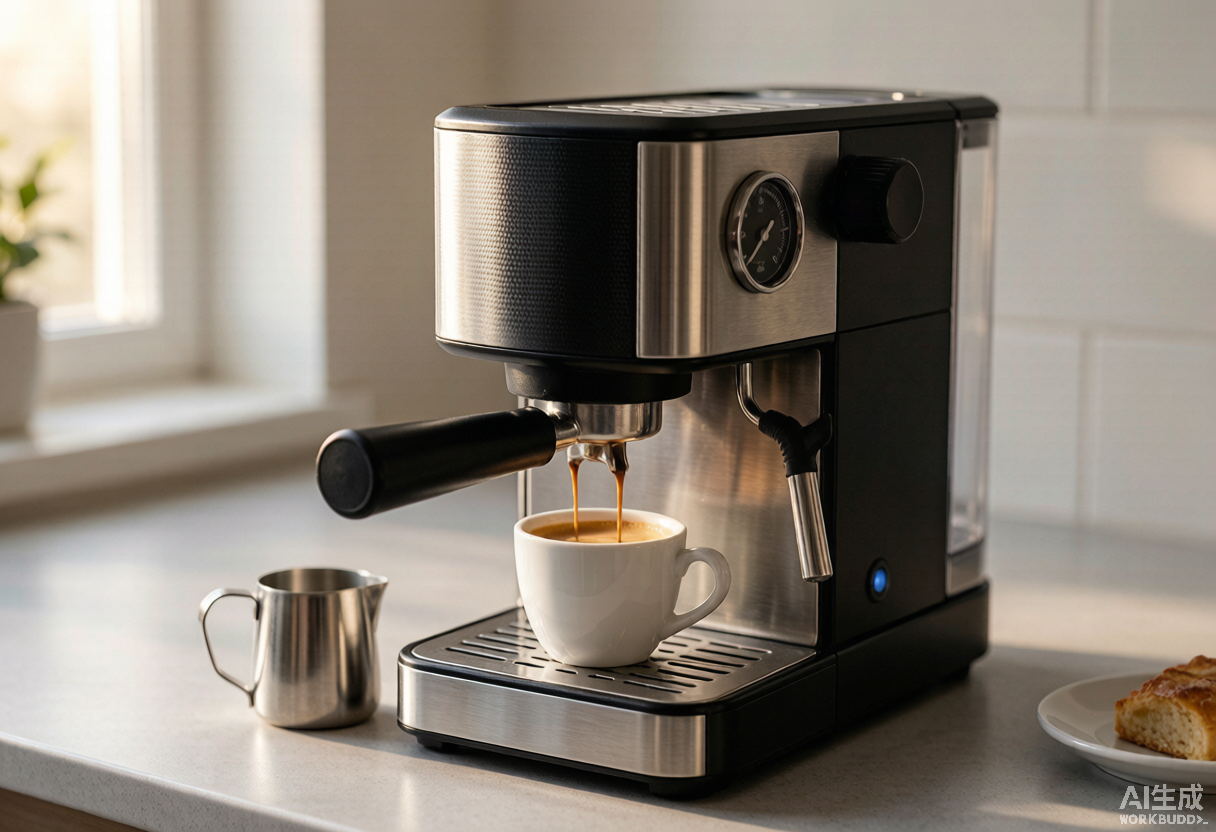
Office espresso machines take more abuse than home machines: hard water, back-to-back drinks during the morning rush, and users with varying skill levels. The right pick depends on forgiveness, cleanup, and throughput — not just barista features. This guide covers shared kitchens, small offices, and home offices.
Our top pick
De'Longhi Magnifica
Super-automatic with built-in grinder and one-touch drinks — anyone can walk up and press a button. Built for shared use where skill levels vary.
Free shipping on eligible Amazon items · 30-day easy returns · you earn on anything bought within 24h
As an Amazon Associate we earn from qualifying purchases.
Editorial note: this guide is compiled from published manufacturer guidance, general best practices, and aggregated owner experience — not hands-on testing. Always follow your machine’s official manual.
Quick comparison
| Pick | Why we like it | |
|---|---|---|
| De'Longhi Magnifica | Super-automatic with built-in grinder and one-touch drinks — anyone can walk up and press a button. Built for shared use where skill levels vary. | View → |
| Breville Barista Express | Semi-automatic with integrated conical burr grinder, 15 bar extraction, and manual steam wand. All-in-one for offices that want quality without buying a separate grinder. | View → |
| Breville Bambino Plus | Compact semi-automatic with 3-second ThermoJet heat-up and automatic milk frothing. 54mm portafilter — ideal for small offices and home offices with limited counter space. | View → |
De'Longhi Magnifica
Editor’s PickSuper-automatic with built-in grinder and one-touch drinks — anyone can walk up and press a button. Built for shared use where skill levels vary.
- + One-touch operation
- + Built-in burr grinder
- + Forgiving for mixed-skill users
- − Less manual control
- − Larger counter footprint
Free shipping on eligible items
Semi-automatic with integrated conical burr grinder, 15 bar extraction, and manual steam wand. All-in-one for offices that want quality without buying a separate grinder.
- + Built-in conical burr grinder
- + 15 bar extraction
- + 67 oz removable water tank
- − Learning curve for milk texturing
- − Larger counter footprint
Free shipping on eligible items
Compact semi-automatic with 3-second ThermoJet heat-up and automatic milk frothing. 54mm portafilter — ideal for small offices and home offices with limited counter space.
- + 3-second heat-up
- + Automatic milk frothing
- + Compact footprint
- − Requires separate grinder
- − 54mm proprietary baskets
Free shipping on eligible items
What office espresso buyers actually need
An office espresso machine takes more abuse than a home machine: hard water, back-to-back drinks during the morning rush, and users with varying skill levels. The right pick depends less on barista features and more on forgiveness, cleanup, and throughput.
- Number of users — a 2-person home office needs a very different machine than a 15-person shared kitchen. Super-automatics handle high volume with one-touch operation; semi-autos require more skill but cost less.
- Water tank size — refilling the tank multiple times a day slows the morning rush. Look for a removable tank of at least 60 oz for shared offices.
- Workflow and speed — 3-second heat-up matters when people are queued before meetings. Super-automatics produce consistent drinks faster for mixed-skill users.
- Cleaning — shared machines get dirty fast. Removable drip trays, accessible brew heads, and descaling indicators reduce the chance someone leaves a mess for the next person.
- Grinder requirement — semi-automatic machines need a separate grinder unless one is built in. Factor that cost and counter space into the decision.
- Milk drinks — if the office drinks mostly lattes and cappuccinos, an automatic steam wand or super-auto milk system saves hours of training versus manual steaming.
- Counter space — office kitchens are often tight. Measure before buying; compact models like the Bambino Plus fit where full-size machines do not.
- Noise — grinders and steam wands are loud in open offices. Quieter machines or super-automatics with enclosed grinders matter more at work than at home.
- Maintenance — hard water causes scale buildup. A machine with a descaling reminder and accessible parts lasts far longer in an office than one without.
Semi-automatic vs super-automatic for an office
| Factor | Semi-automatic | Super-automatic |
|---|---|---|
| Skill needed | Some — grinding, tamping, steaming | Minimal — one button per drink |
| Morning throughput | Slower with mixed users | Fast and consistent |
| Cleanup | More parts to wash daily | Mostly self-rinsing |
| Milk drinks | Manual steaming (learning curve) | Automatic or one-touch |
| Upfront cost | Lower | Higher |
| Best for | 2-5 person office, coffee enthusiasts | Shared kitchen, 5+ users |
Espresso machine vs pod machine for an office
| Factor | Espresso machine | Pod machine |
|---|---|---|
| Cost per cup | Lower with fresh beans | Higher (pods $0.50-1.00 each) |
| Drink quality | Better with fresh beans and proper technique | Consistent but limited |
| Maintenance | Regular cleaning and descaling | Minimal |
| Variety | Wide — any bean, any drink | Limited to available pods |
| Waste | Less (compostable grounds) | More (plastic and aluminum pods) |
| Best for | Offices that care about coffee quality | Very low-volume or guest areas |
Office workflow: morning rush and cleanup
The morning rush is where office espresso machines earn or lose their keep. A super-automatic lets anyone walk up and press a button; a semi-automatic creates a bottleneck if only one person knows how to steam milk.
Assign a simple weekly rotation for emptying the drip tray and refilling beans. If nobody owns the machine, it will get dirty and break down faster.
- Keep a dedicated milk pitcher and cleaning cloth near the machine.
- Post a one-page cheat sheet for the most common drinks.
- Schedule descaling every 1-3 months depending on water hardness.
- Buy beans in bulk but store them properly — not in the hopper for weeks.
Cleaning and maintenance for shared machines
Shared espresso machines need more frequent cleaning than home machines because more people use them and fewer people feel responsible for them.
Daily: empty drip tray, rinse steam wand, wipe group head. Weekly: backflush with cleaner, wash portafilter and baskets. Monthly: descale according to manufacturer instructions, especially in hard-water areas.
- Daily — empty the drip tray and rinse the steam wand after each milk drink.
- Weekly — backflush the group head with espresso machine cleaner and wash all removable parts.
- Monthly — run a descaling cycle; hard water offices may need this every 2-3 weeks.
- As needed — replace water filter, check grinder burrs, and inspect for leaks.
Buying advice
For a shared kitchen with mixed skill levels, a super-automatic like the Magnifica removes the skill barrier. For a 2-5 person office that cares about quality, the Barista Express gives you a built-in grinder and room to learn. For a small office or home office with limited counter space, the Bambino Plus is compact and fast. If you need a machine for a smaller team, see our small office and home office espresso guide. Put a water filter on the tank and a descaler on the calendar — hard water is the number one killer of office espresso machines.
FAQ
What size espresso machine do I need for an office?
For 2-5 people, a compact semi-automatic like the Bambino Plus works well. For 5+ users in a shared kitchen, a super-automatic like the Magnifica handles higher volume and mixed skill levels with one-touch operation.
Can I use a home espresso machine in a shared office?
Yes, but choose one built for heavier use. Super-automatics and machines with removable water tanks and drip trays hold up better than delicate home models. Avoid machines that require frequent manual cleaning if multiple people will use them.
Super-automatic or semi-automatic for an office?
Super-automatic if you have 5+ users or mixed skill levels — one-touch drinks and self-rinsing reduce friction. Semi-automatic if you have 2-5 coffee enthusiasts who do not mind learning to steam milk and want better value.
How often should I clean an office espresso machine?
Daily for the drip tray and steam wand, weekly for the group head and portafilter, and monthly for descaling. Hard water areas may need descaling every 2-3 weeks. A clean machine lasts years longer.
Do I need a machine with a built-in grinder?
For shared offices, yes — a built-in grinder means one less appliance on the counter and consistent grind size. The Barista Express includes one. If you choose the Bambino Plus, budget for a separate grinder.
Are pod machines better for offices?
Pod machines are low-maintenance but cost more per cup and produce more waste. They work for very low-volume or guest areas. For an office that drinks espresso daily, a bean-to-cup machine is cheaper and better quality over time.
What is the best espresso machine for a small office of 2-3 people?
For 2-3 people with limited counter space, the Breville Bambino Plus is compact and fast. If you want a built-in grinder, the Barista Express is the step-up choice. See our small office and home office espresso guide for more picks.
Ready to start brewing better?
Our top pick for this guide — check today’s price and clip any on-page coupon on Amazon:
De'Longhi Magnifica
Super-automatic with built-in grinder and one-touch drinks — anyone can walk up and press a button. Built for shared use where skill levels vary.
As an Amazon Associate we earn from qualifying purchases.
Want exact doses? Use our free brew calculators.